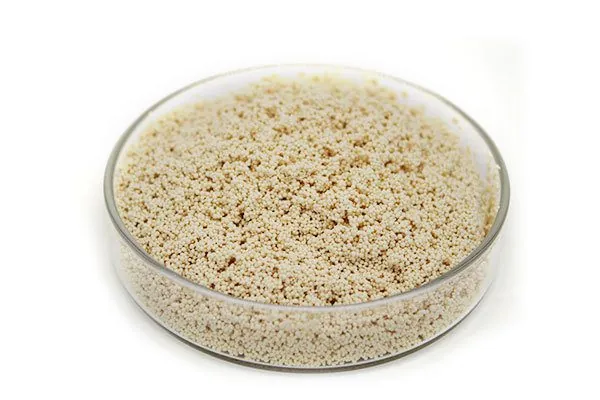
Uranium adsorption resins are specialized polymeric sorbents designed for the selective extraction, concentration and purification of uranium from acidic leachates, seawater, mine drainage, contaminated groundwater and nuclear waste streams. They are a core unit operation in uranium hydrometallurgy, competing with solvent extraction and precipitation. Against those alternatives, uranium-selective resins offer a high enrichment factor, convenient solid-liquid separation, low reagent consumption and tolerance of low-concentration uranium feeds.
1. Resin families and uranium speciation
| Resin type | Where it wins | Mechanism / notes |
|---|---|---|
| Strong-base anion exchange | Acid heap leaching - U as uranyl sulfate complexes UO2(SO4)2(2-) and UO2(SO4)3(4-) | Electrostatic capture of the anionic complexes; sulfate, ferric, vanadate and molybdate are the main competitors |
| Iminodiacetate chelating | Near-neutral and mildly acidic streams | Chelation of the uranyl cation UO2(2+) |
| Aminophosphonic chelating | Acidic water systems | Performs well with moderate iron and aluminium interference |
| Amidoxime-functionalized | Seawater and trace-level uranium | The amidoxime ligand forms stable five-membered chelate rings with UO2(2+); outstanding selectivity even at trace concentration and high salinity |
2. The typical industrial recovery flowsheet
- Pretreatment - filter the raw leachate or groundwater to remove suspended solids; adjust pH and redox potential to stabilize the target uranium species
- Adsorption - the clarified solution flows through fixed resin columns, or continuously in resin-in-pulp (RIP) circuits for ore pulp; the stage ends when uranium breakthrough appears at the outlet
- Washing - interstitial wash displaces the mother liquor before elution
- Elution - for anion resins loaded with uranyl sulfate, concentrated chloride, nitrate or acidified brine displaces uranium into a high-grade eluate; amidoxime resins are stripped with dilute mineral acid
- Post-treatment - the uranium-rich eluate is polished by a second resin stage, then precipitated with ammonia, hydrogen peroxide or alkali to yield yellow cake
- Regeneration - the resin is rinsed and converted back to its original ionic form before re-entering the adsorption cycle
3. Critical parameters and operating risks
- pH, contact time, flow rate, competing-ion concentration and temperature set the loading curve
- Excess sulfate sharply reduces anion-resin capacity - balance leach chemistry against resin choice
- Maintain oxidizing conditions so uranium stays in the hexavalent uranyl form
- Fouling by clay, organic humics and silica is a common risk and calls for periodic chemical cleaning
With properly controlled operation, resin systems can lower uranium concentration to meet environmental discharge limits while producing qualified uranium concentrate. The same technology serves both conventional uranium ore processing and emerging low-grade resources such as seawater and waste-rock leachate.
Need help with this duty?
Send your water analysis, flow rate and target quality — we will come back with a resin recommendation and a regeneration estimate.
More technical articles
- How to Select an Ion Exchange Resin: A Practical Checklist for Process Engineers
- Regenerating Strong Acid Cation Resin: Acid Dosage, Concentration and Flow Rate
- Chelating Resins for Heavy Metal Removal: Selectivity, pH Windows and Design Rules
- Ion Exchange Resin Fouling: How to Diagnose It and Clean It Without Damaging the Bed
- Gold Adsorption Resins and Industrial Recovery Processes
- PFAS Selective Adsorption Resin: Operating Instructions from Influent to Replacement
- CO2 Adsorption Resins and Solid-Sorption Carbon Capture Processes