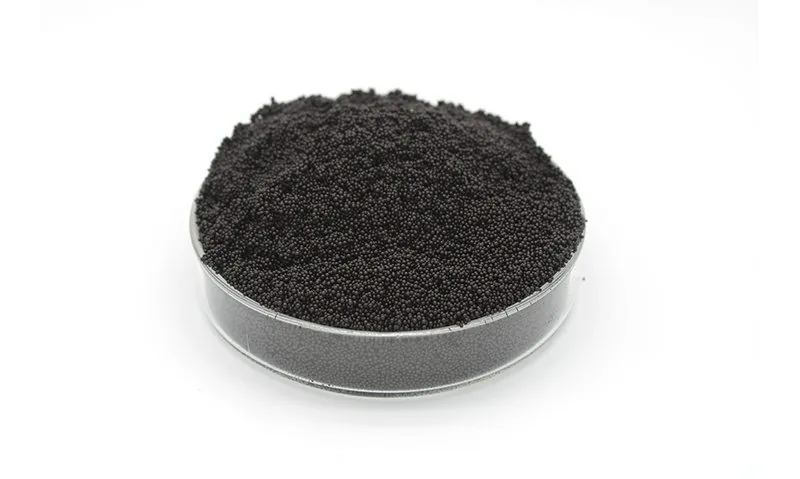
Gold adsorption resins are specially functionalized polymeric adsorbents designed for the selective capture and recovery of gold species from hydrometallurgical leachates, e-waste rinsing liquids, cyanidation liquors and electroplating wastewater. Compared with traditional activated-carbon gold adsorption, resin-based technology offers superior selectivity, stable dynamic performance, easy elution and far less gold lost during regeneration - which is why it has been widely adopted in resin-in-pulp (RIP) and resin-in-leach (RIL) gold plants.
1. Resin families and the chemistry of gold capture
| Resin family | Typical system / gold species | Capture mechanism |
|---|---|---|
| Weak-base anion exchange resin | Cyanidation liquor - Au(CN)2- | Protonated amine groups bind the anionic dicyanoaurate complex by electrostatic attraction |
| Thiourea-modified chelating resin | Chloride and aqua regia media - AuCl4- | Sulfur and nitrogen donor groups form stable coordination bonds through soft-soft interaction |
| Sulfur-containing macroporous adsorbent | Cyanide and chloride systems | Macroporous skeleton plus sulfur donors; strong discrimination against base metals |
This selectivity is the economic core of the process: sulfur and nitrogen donor groups bind gold effectively while suppressing interference from coexisting copper, iron, nickel and zinc ions, so the eluate that reaches the recovery step stays clean.
2. The standard industrial workflow
- Feed pretreatment - solid-liquid separation, pH adjustment, and removal of suspended solids and competing impurities
- Adsorption - the clarified solution flows through fixed resin columns, or contacts resin beads directly in pulp tanks for continuous RIP / RIL operation
- Elution - once resin loading reaches saturation, gold is stripped with acidic thiourea solution or alkaline cyanide eluent
- Recovery - the rich eluate goes through electrowinning or chemical reduction to yield crude gold sludge
- Regeneration - after washing and reactivation, the resin returns to the adsorption cycle for repeated use
3. Key control parameters
- Solution pH - set it to keep the gold species in the ionic form the resin was chosen for
- Flow velocity - over-fast flow reduces adsorption breakthrough capacity
- Eluent concentration - improper strength leads to incomplete gold stripping or resin degradation
- Temperature and bed height - both shift kinetics and the shape of the mass-transfer zone
With these parameters under control, modern resin gold recovery achieves adsorption efficiency above 98% even for dilute streams, and the resin holds stable performance over hundreds of adsorption-elution cycles. The route is especially suitable for low-grade ore, secondary precious-metal recycling and small-scale refining workshops as a low-carbon alternative to carbon adsorption.
Need help with this duty?
Send your water analysis, flow rate and target quality — we will come back with a resin recommendation and a regeneration estimate.
More technical articles
- How to Select an Ion Exchange Resin: A Practical Checklist for Process Engineers
- Regenerating Strong Acid Cation Resin: Acid Dosage, Concentration and Flow Rate
- Chelating Resins for Heavy Metal Removal: Selectivity, pH Windows and Design Rules
- Ion Exchange Resin Fouling: How to Diagnose It and Clean It Without Damaging the Bed
- PFAS Selective Adsorption Resin: Operating Instructions from Influent to Replacement
- Uranium Adsorption Resins and Industrial Extraction Processes
- CO2 Adsorption Resins and Solid-Sorption Carbon Capture Processes